Types of Therapy Room
The types of therapy room are as follows:
Frigidarium
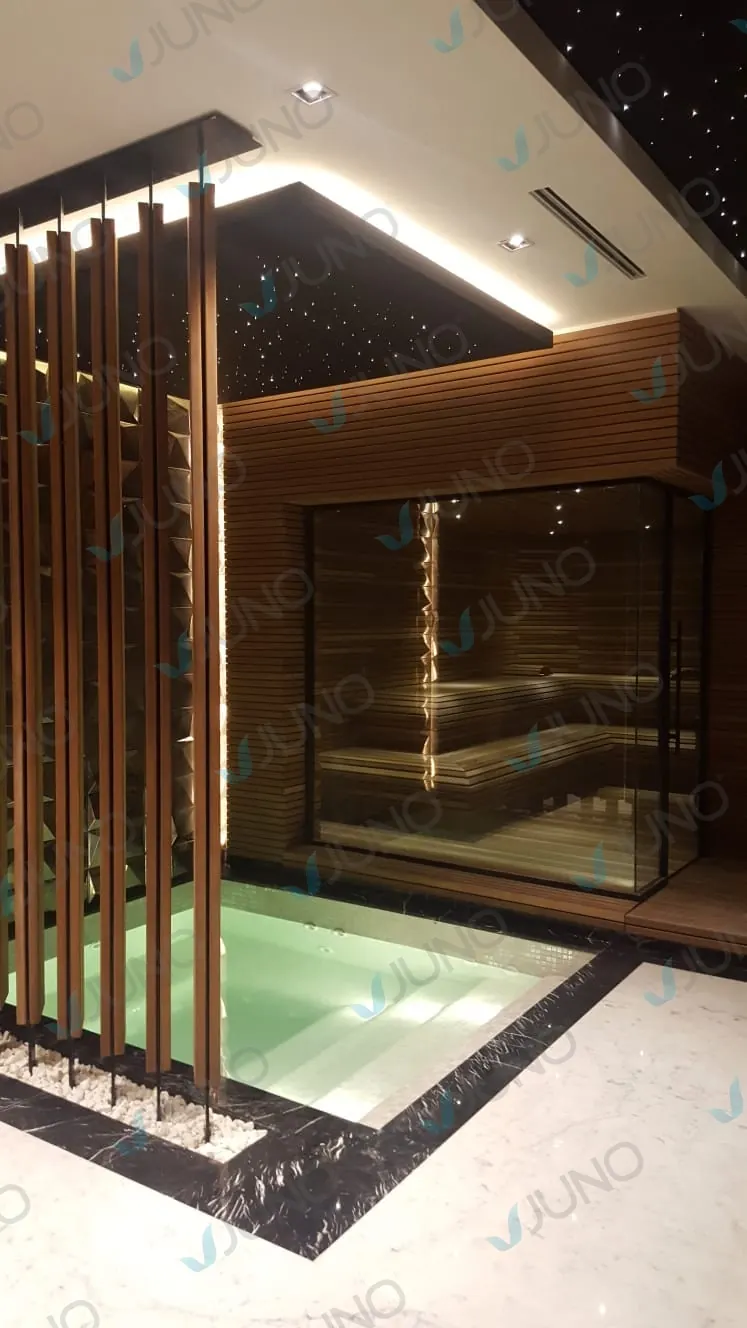
In ancient Roman baths, the frigidarium was the cold section containing a pool.
In ancient times, frigidarium pools, used after the bath, were generally cooled with snow and built on the northern sides of buildings. This kept the pool water cold.
Today, frigidarium pools are called shock pools, and they provide a sudden cooling after hot therapy. The skin pores that open during hot therapy are cleansed, and thanks to shock pools they close and tighten. This makes the skin look firmer and younger.
Caldarium
Hot therapy systems have been used in various forms since ancient Roman times.
The caldarium offers gentler heat and steam therapy than a sauna or steam room. The maximum temperature is 45–50°C. This makes it an ideal hot therapy system for people who do not like too much heat and steam, or who have blood pressure problems.
Thanks to the gentle heat, the body’s natural cooling system starts to work. This increases blood circulation, relaxes the muscles and allows deeper breathing.
Tepidarium
In Roman times, the tepidarium was a therapy system in which the walls and floor were heated so that the human body was relaxed by this warm contact.
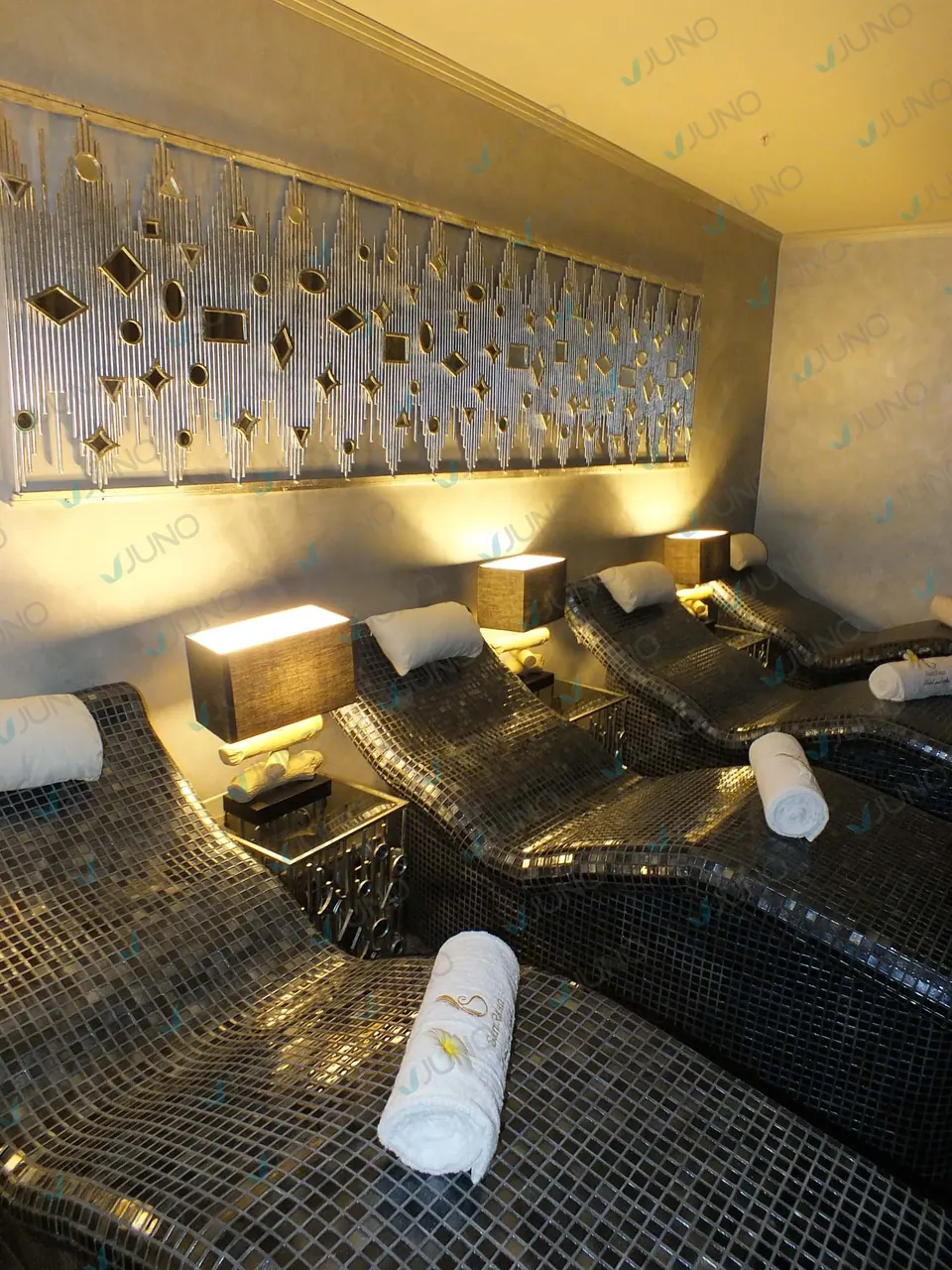
The tepidarium is drier than other hot therapies and is dimly lit. Stone beds heated with today’s technology are combined with special lighting.
Because the ambient temperature (39°C) is close to body temperature, it regulates blood circulation without putting it under strain. The tepidarium relaxes the muscles and strengthens the immune system.
To see the positive effects on the body in a tepidarium, you need to stay for at least 30 minutes. However, thanks to the gentle air temperature, you can stay and rest for as long as you wish.